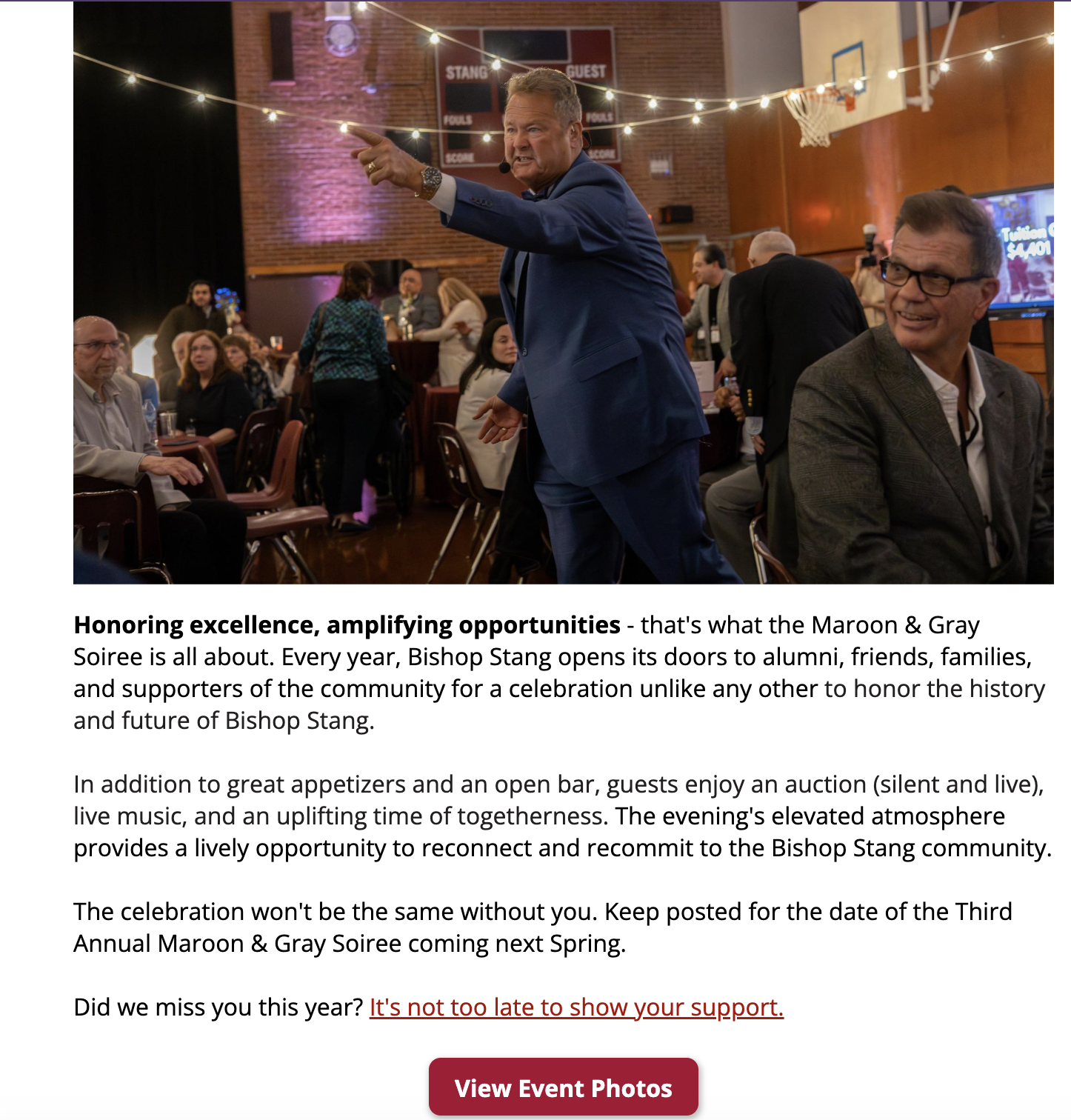
Maroon & Gray Soirée: Campaign and Event Design
Type: Fundraiser Event, Campaign, physical media, digital media
Role: Designer & Campaign Strategist
Solo/Team: Team Collaboration (Lead Designer for Visual & Digital Assets)
Timeframe: January - March 2026 (Approx. 10-12 Weeks)
Tools: Canva, OneCause, Constant Contact, Instagram, print media, Google Sheets
Bishop Stang High School’s Signature Fundraiser Supporting Tuition Assistance
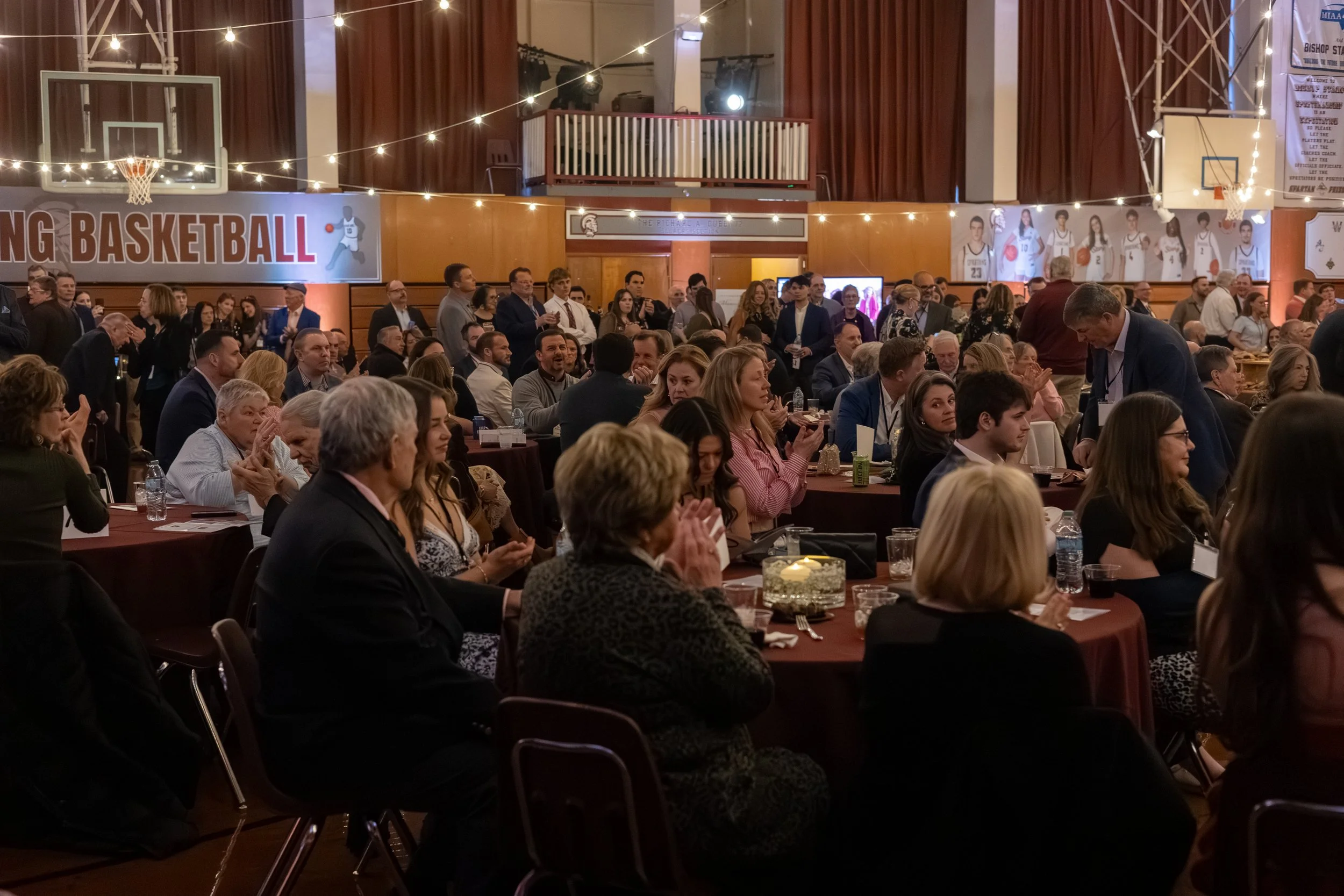
The Maroon & Gray Soirée is Bishop Stang High School’s largest annual fundraising event, bringing together alumni, families, faculty, and community supporters for an evening centered around celebration, recognition, and giving back. The event not only honors Hall of Fame and Hall of Honors inductees but also raises critical funds to support student tuition assistance, which is integral to their mission as a nonprofit school.
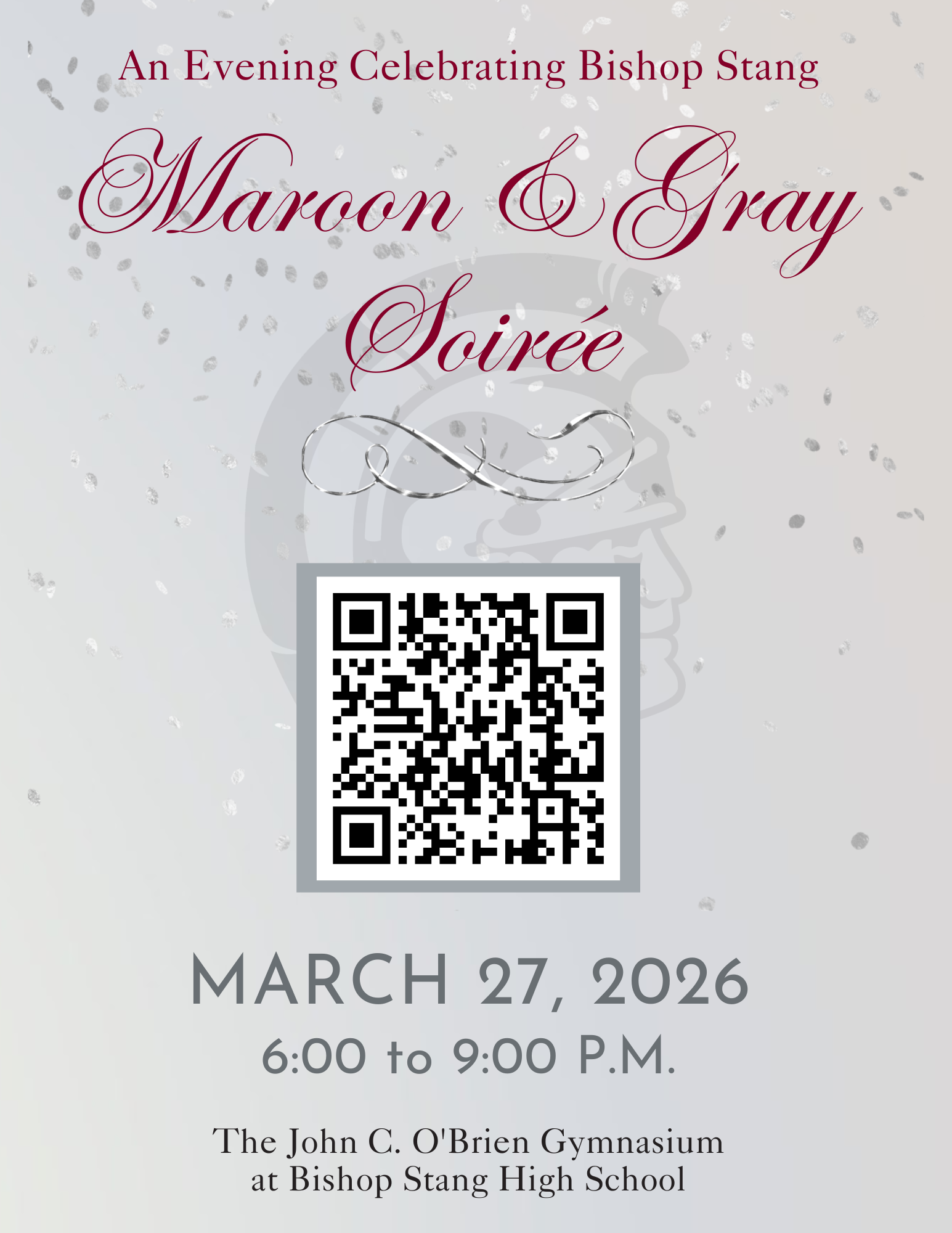
For the 2026 Soirée, I played a key role in designing and executing the visual identity and communication system across both physical and digital touchpoints. This project went beyond creating individual graphics. It required building a cohesive, accessible, and engaging experience that guided attendees from first awareness all the way through the event night itself.
The Problem
The Soirée is a large-scale event with multiple audiences: alumni, current parents, sponsors, teachers/staff, inductees, and prospective families. Each group engages differently, which makes communication complex.
Key challenges included:
Reaching a wide range of age groups, including less tech-savvy donors
Maintaining a cohesive visual identity across many different formats
Encouraging early ticket sales and raffle/auction participation
Managing a high volume of event information without overwhelming users
Supporting both digital and physical engagement before and during the event
There wasn’t a fully unified system in place previously, which created opportunities for inconsistency and missed engagement.
My Approach
I approached this project as a full campaign ecosystem, rather than a set of individual deliverables. The goal was to create a consistent and recognizable visual language across:
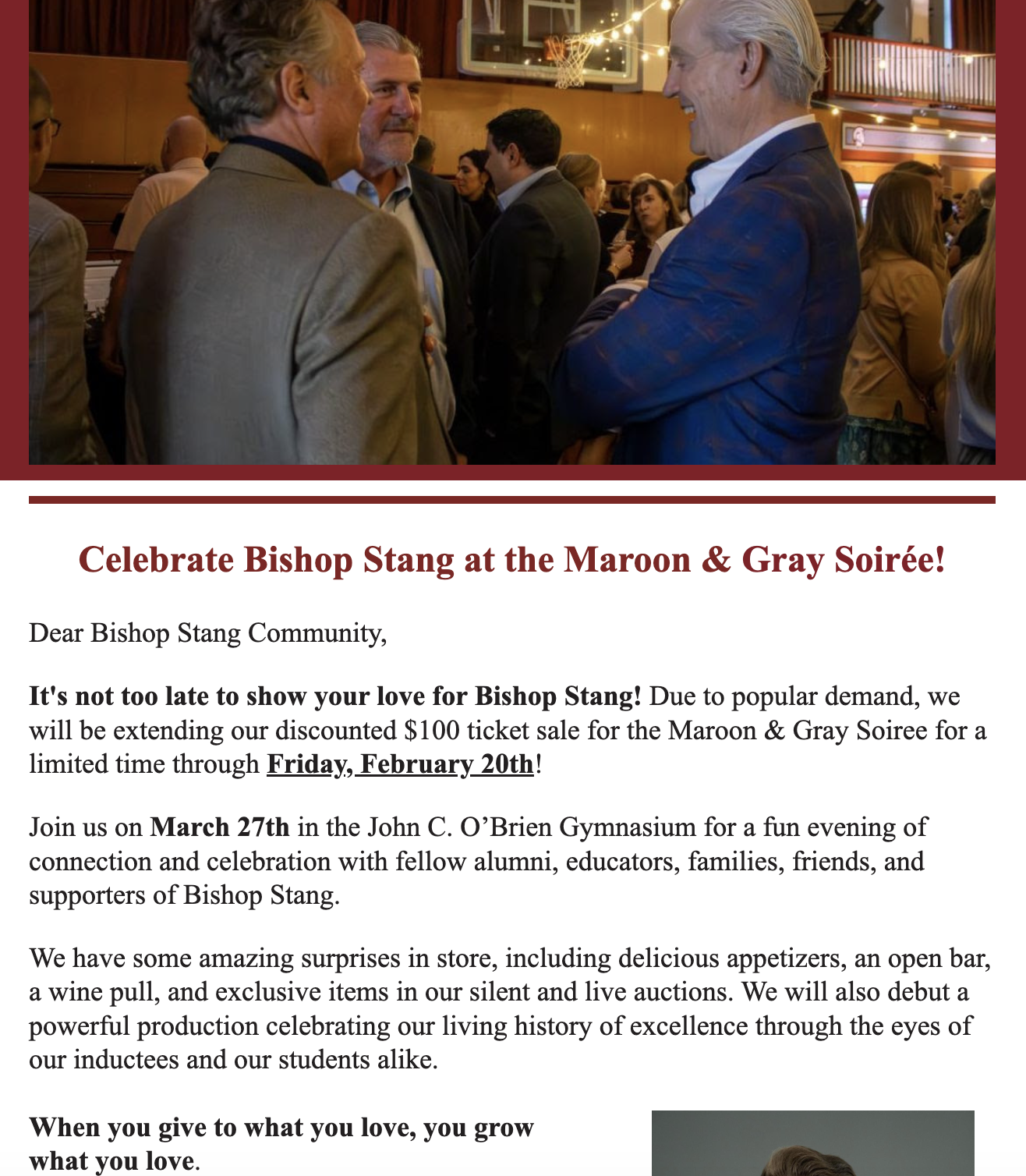
Email marketing
Social media
Print materials
Event signage
On-site experience
I also focused heavily on accessibility and usability, making sure every touchpoint (especially for older audiences, as our school has been around for over 60 years, so we have older alumni who attend) had a clear, easy way to engage (QR codes and physical alternatives, clear hierarchy, readable layouts). Another key priority was guiding the user journey, from:
Awareness (emails + social posts)
Consideration (invites, raffle info, sponsor visibility)
Conversion (ticket sales, donations)
Event experience (signage, program book, auctions)
Development Process
Early Planning: Audience Targeting & Structure
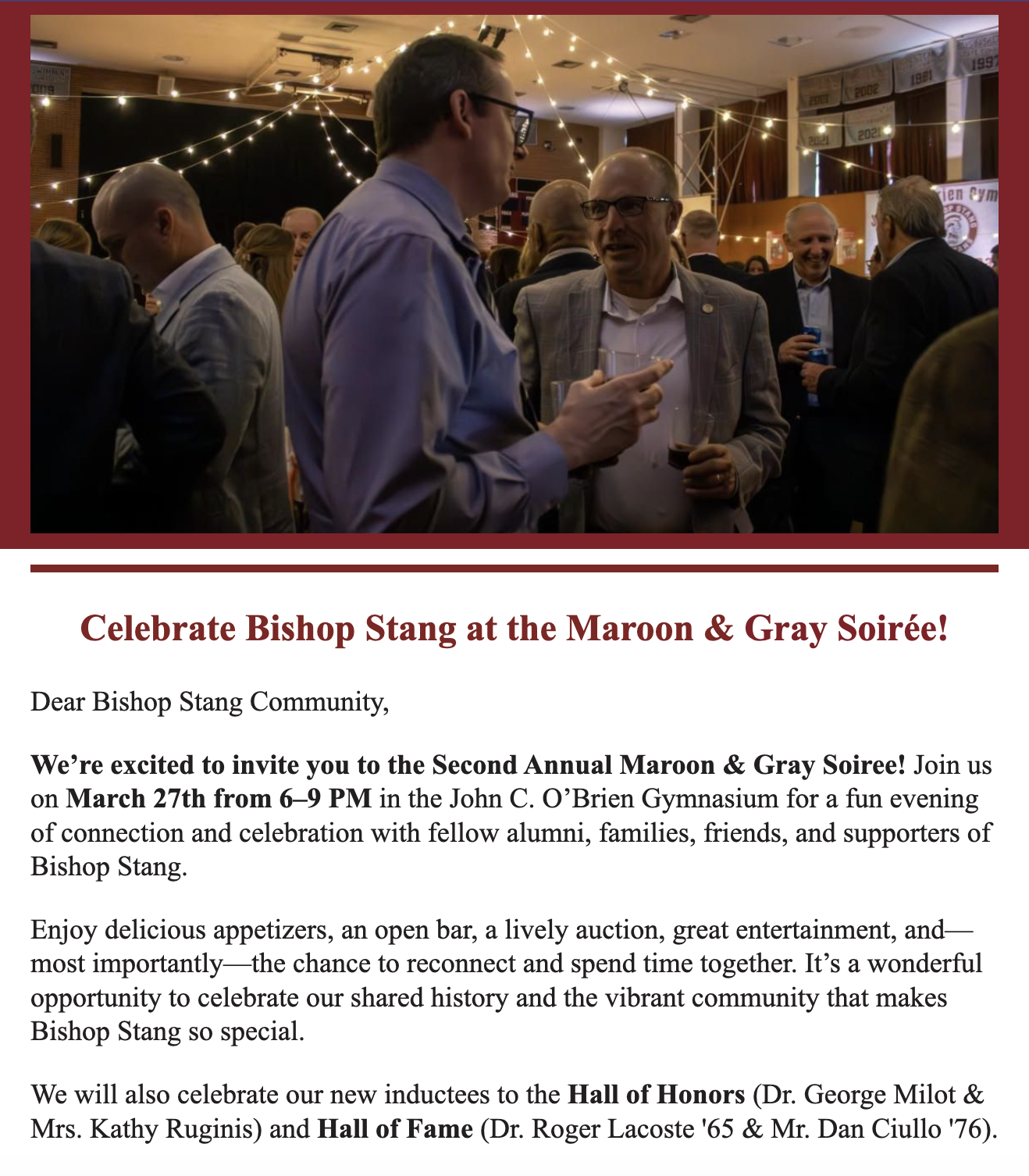
I began by organizing segmented email lists to ensure messaging could be tailored to specific groups such as alumni, parents, sponsors, and top donors. This allowed for more intentional communication instead of one-size-fits-all outreach. These lists were uploaded to Constant Contact, where the email was written/designed and sent out to these lists.
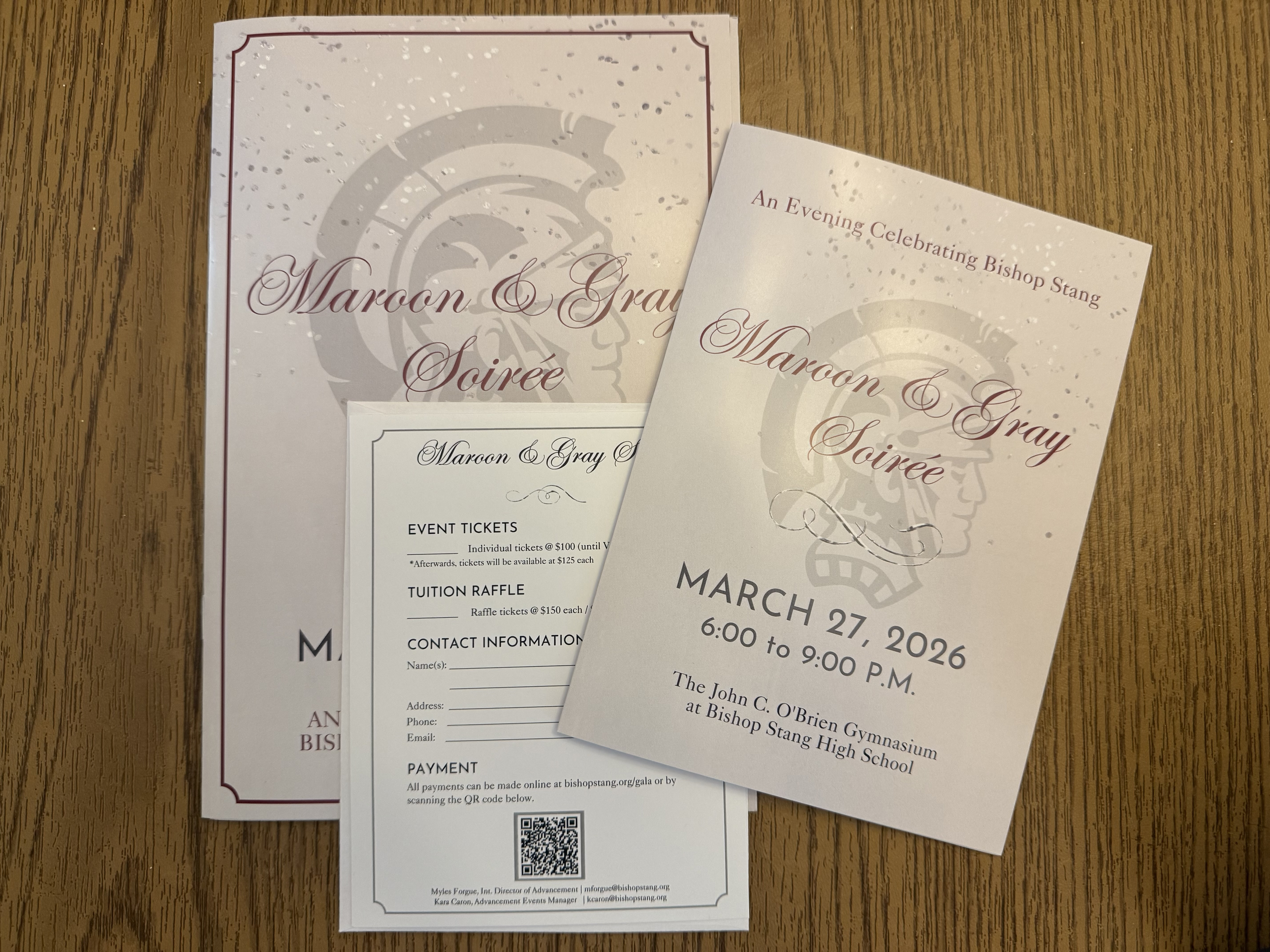
Print & Invitation Design
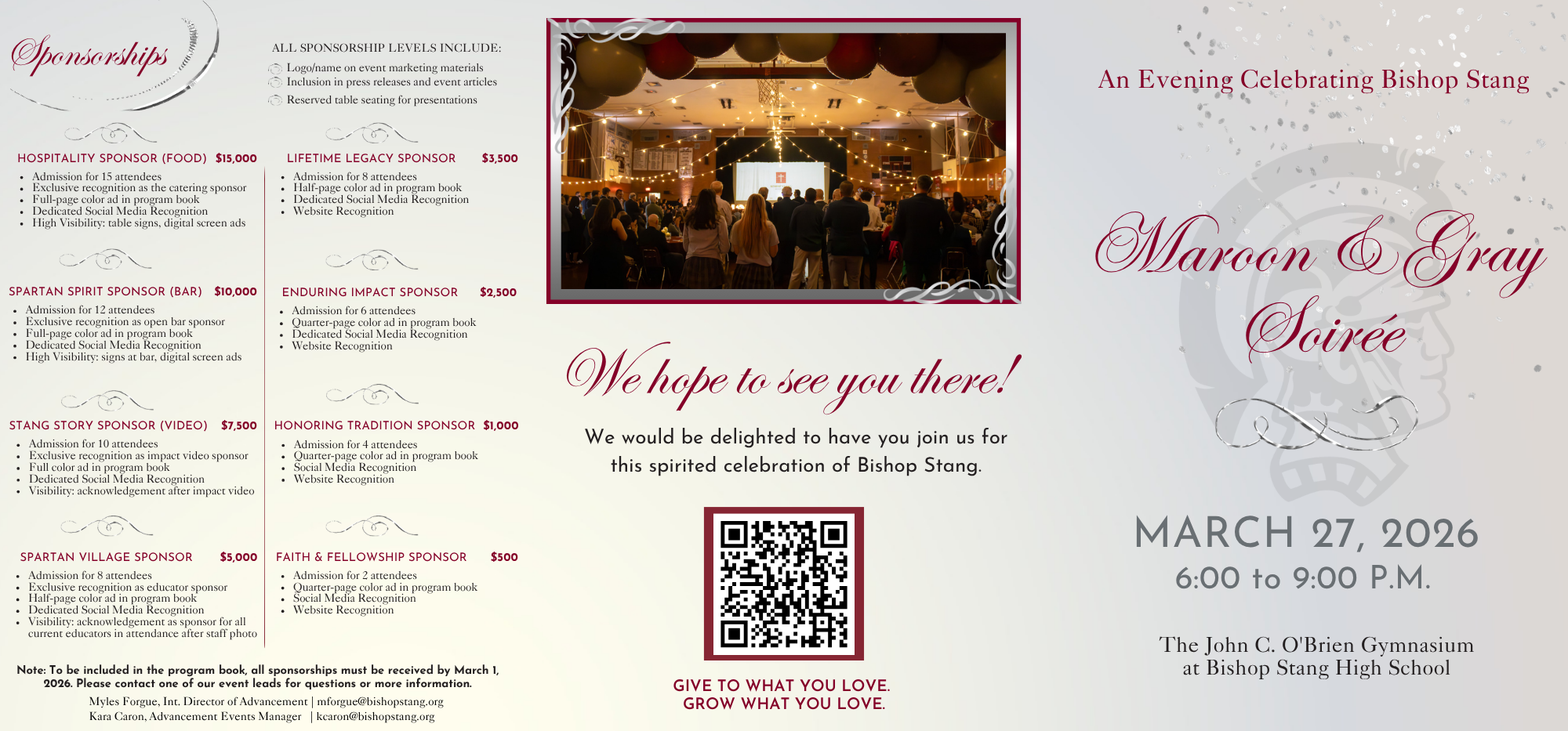
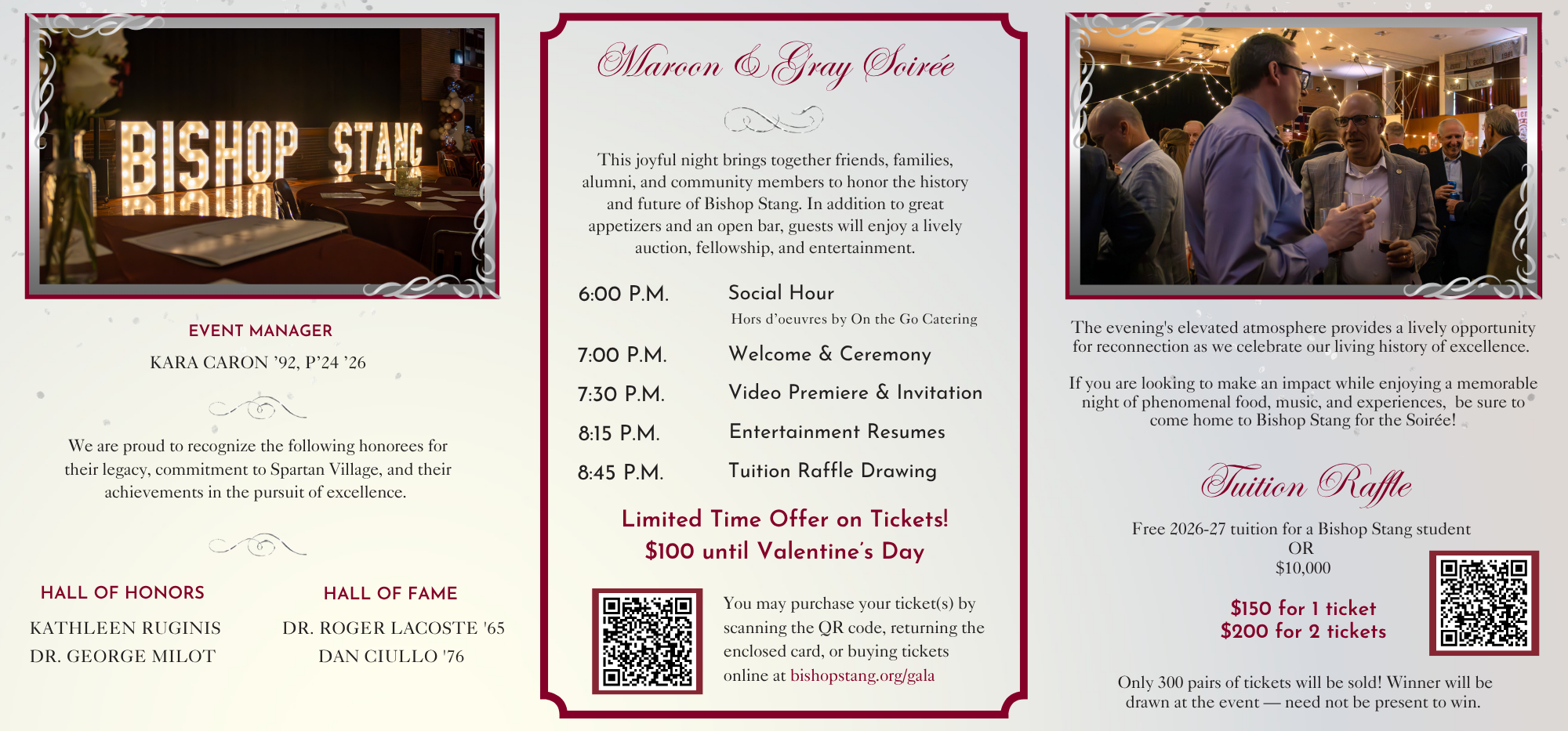
One of the most important early touchpoints was the trifold invitation mailed to key supporters. I designed it to balance elegance with clarity, including:
Event details and schedule
Sponsorship tiers and perks
Hall of Fame/Honors inductees
QR codes for tickets and raffle entry
A physical mail-in option for donations
This piece needed to feel premium while still being easy to navigate.
Digital Campaign & Social Media
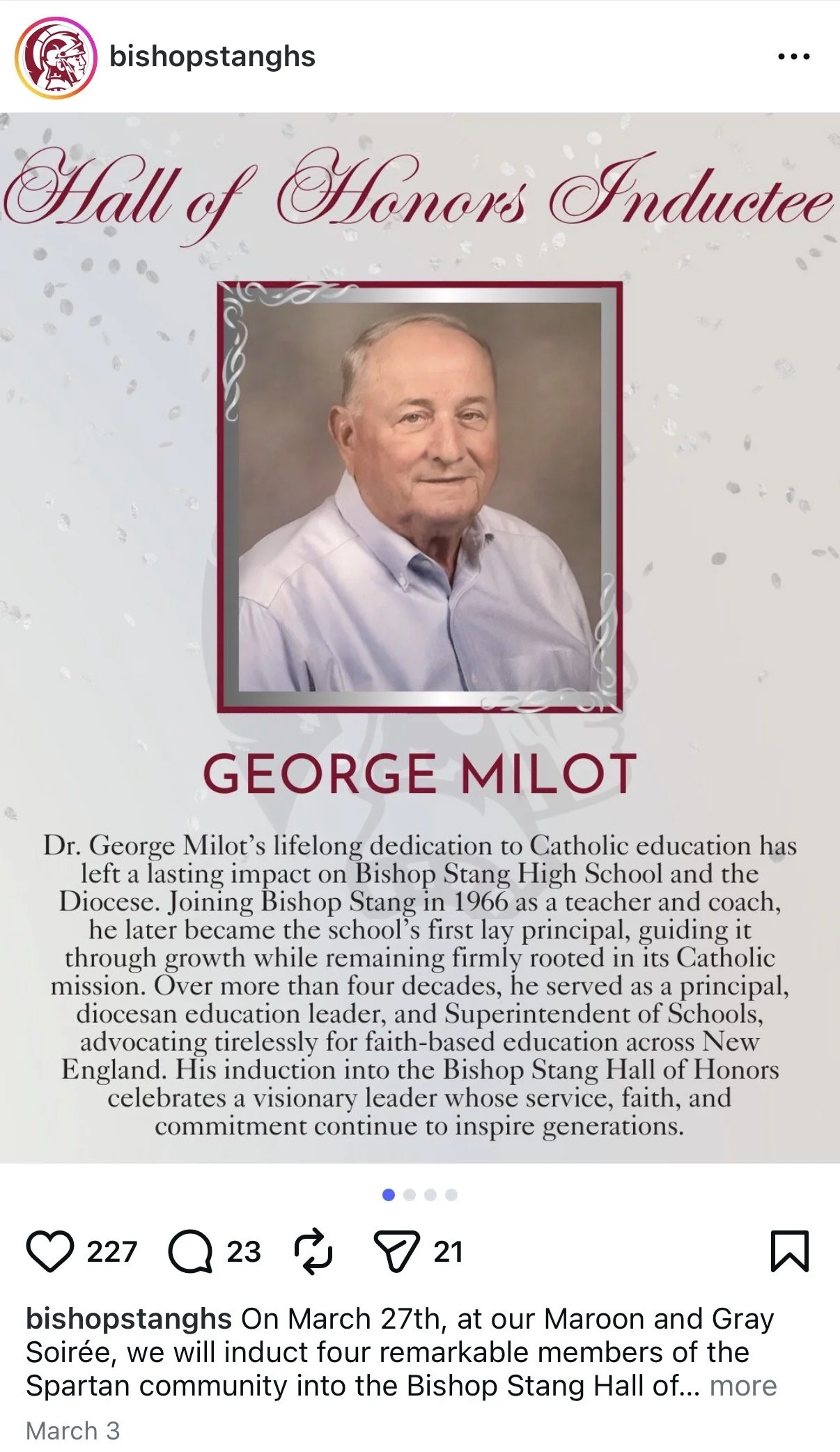
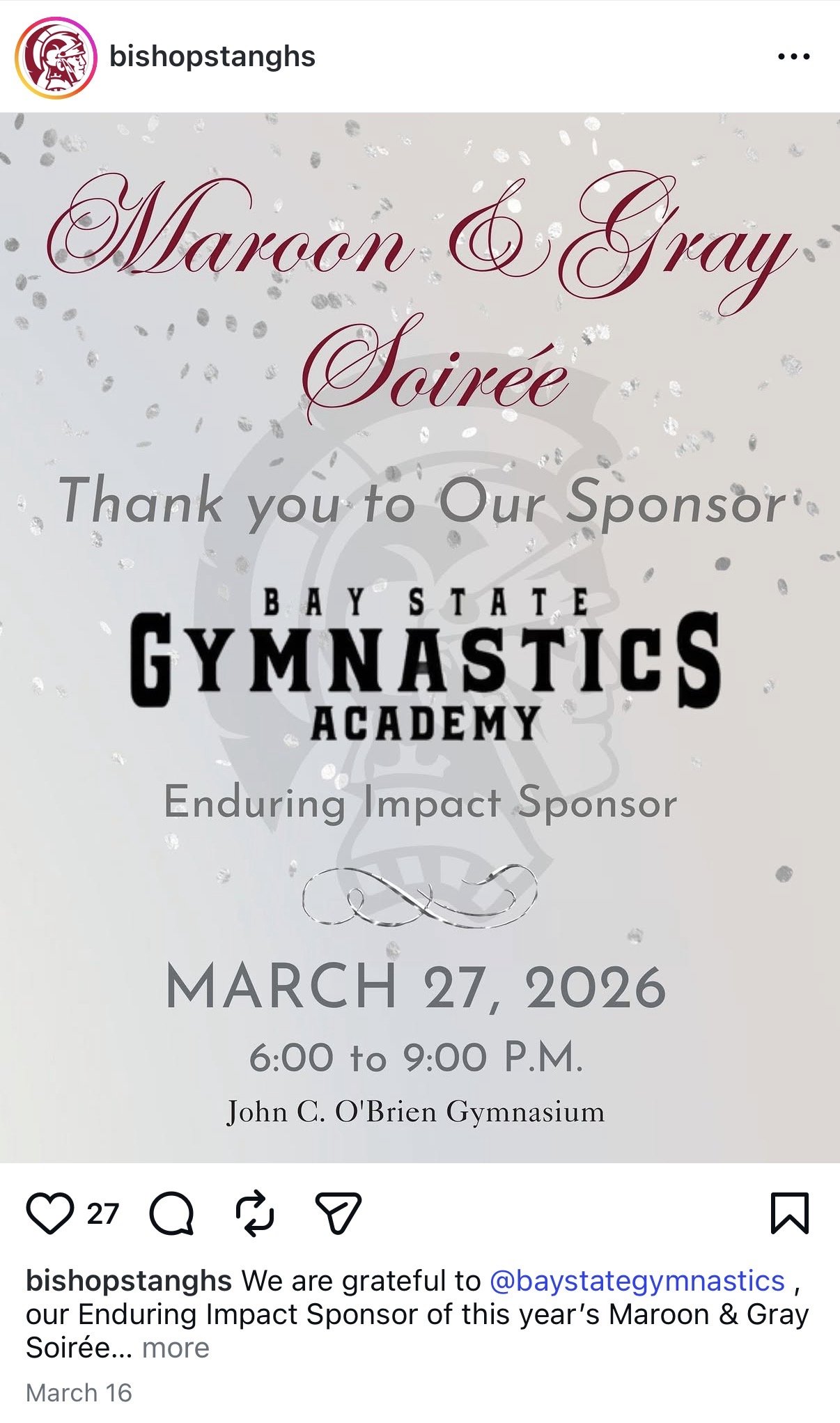
I created a series of social media graphics to build anticipation and highlight key aspects of the event, including:
Hall of Fame and Hall of Honors inductees
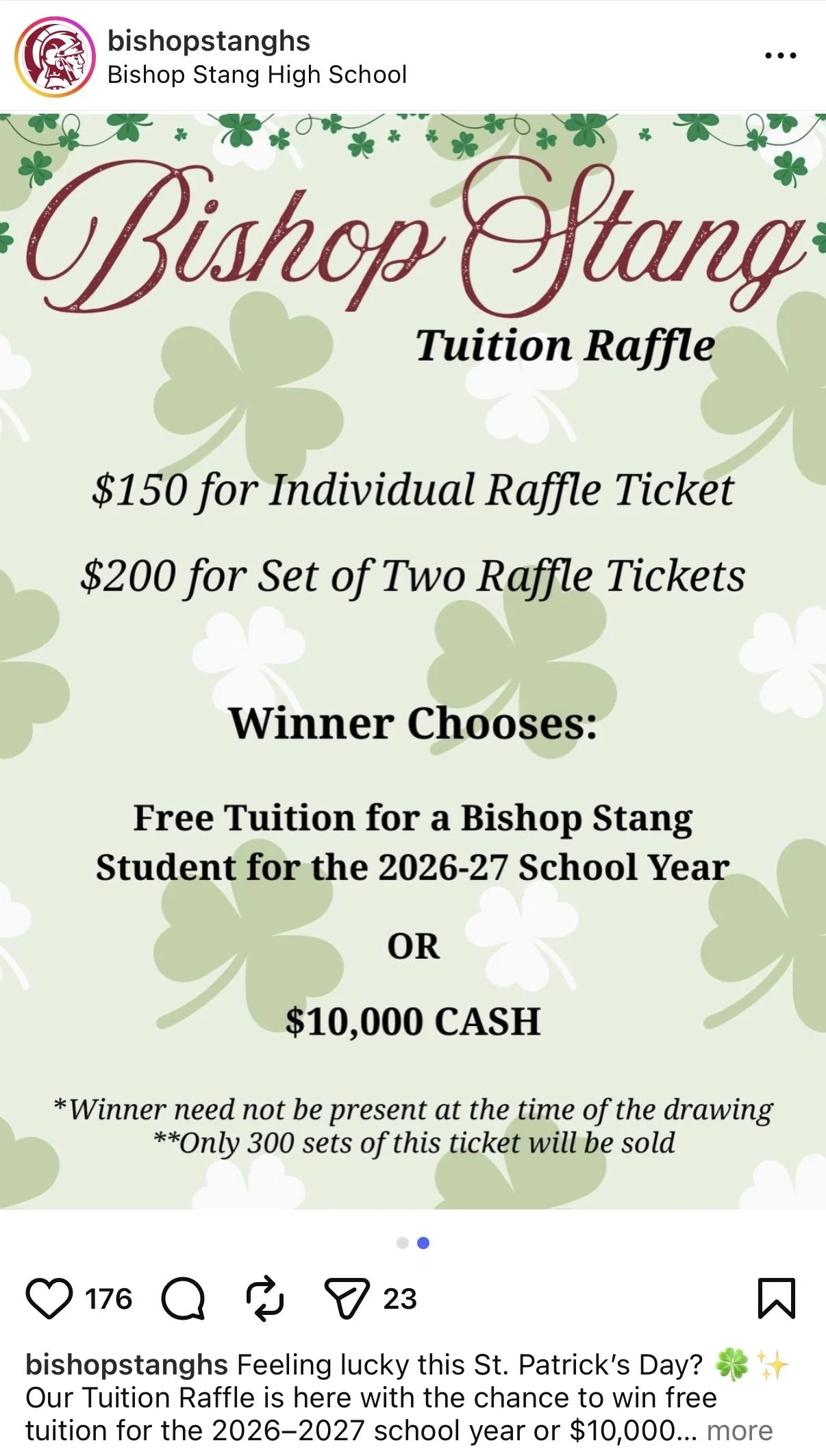
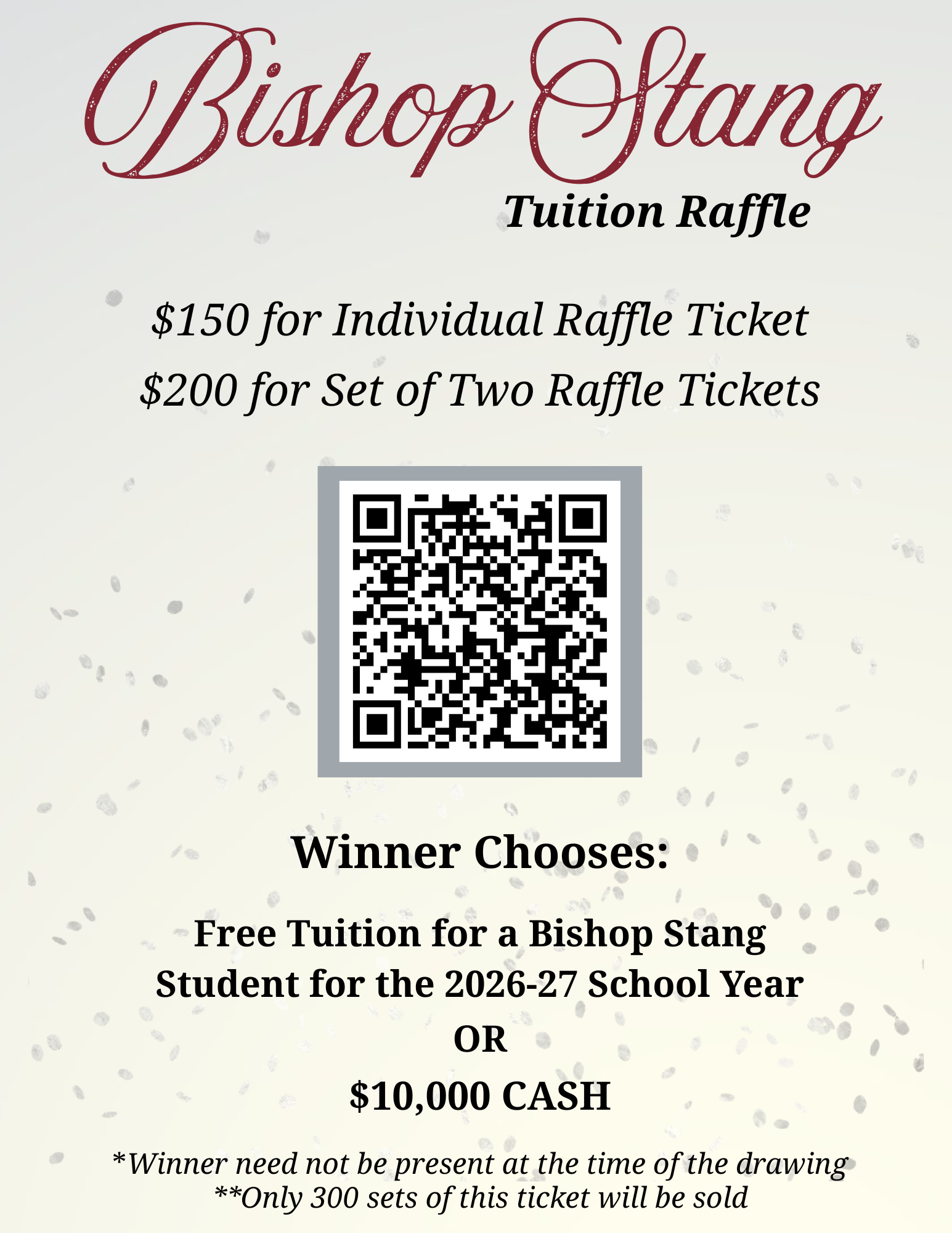
Tuition raffle promotions (including a themed St. Patrick’s Day variation)
These posts helped maintain consistent engagement leading up to the event.
Event System Design (OneCause Platform)
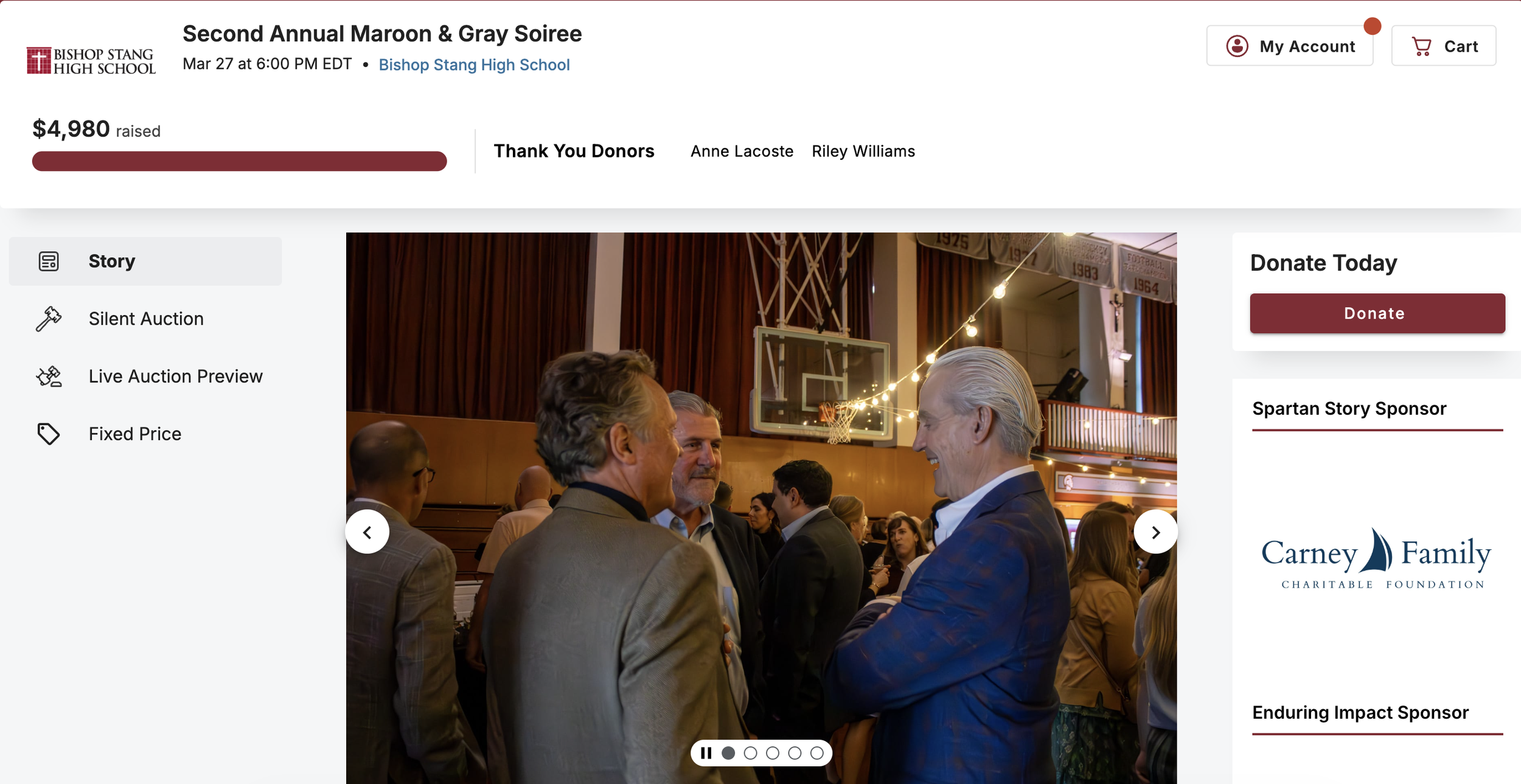
I helped set up and manage the event through OneCause, organizing:
Silent auction items
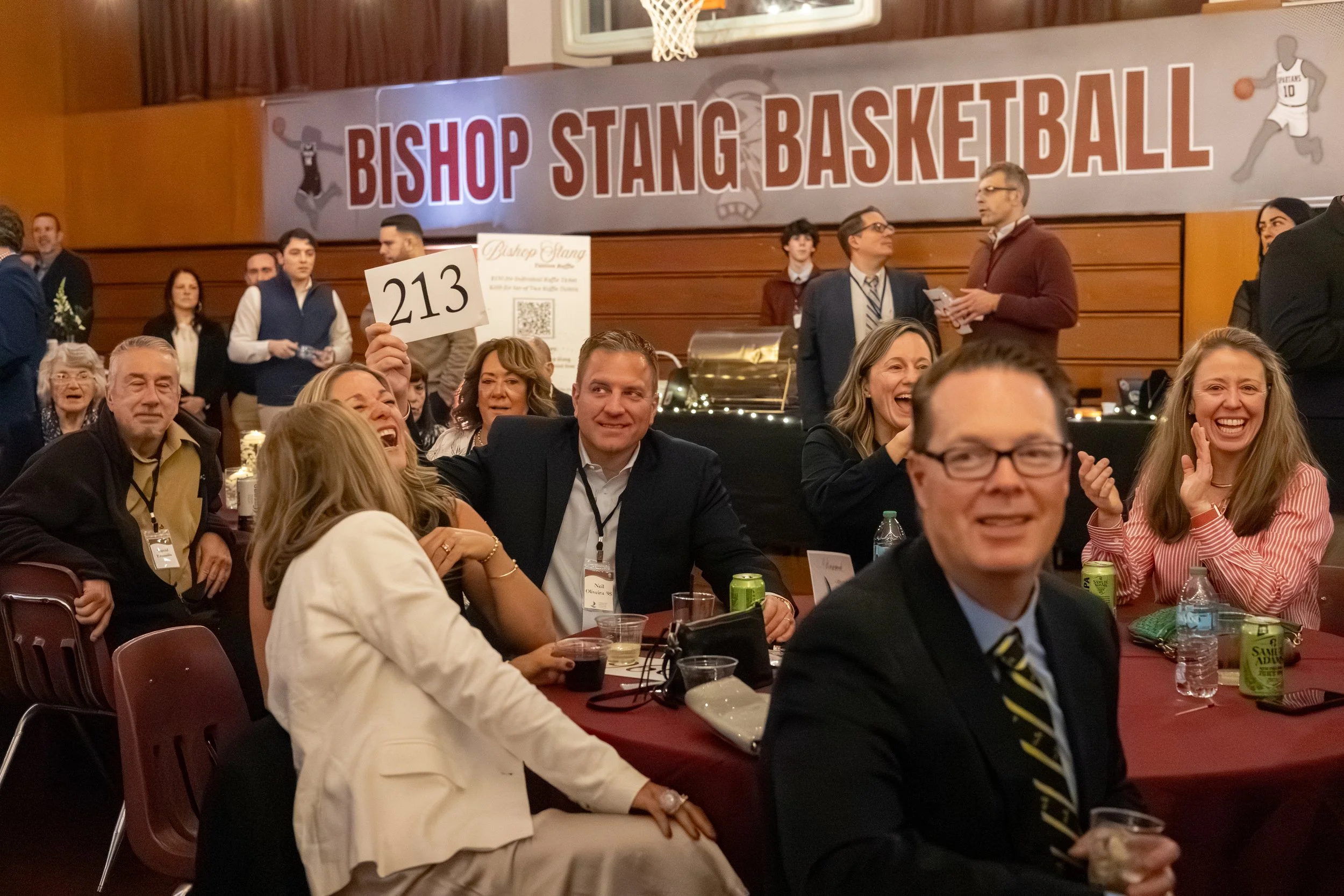
Live auction structure
Special fundraising activities (wine pull, Heads & Tails)
This required thinking through the user experience of giving, ensuring participation felt simple and engaging.
Onboarding New Families
To expand reach, I designed double-sided inserts with QR codes that were included in accepted students’ materials. This introduced new families to the event and encouraged early engagement with the community.
On-Site Experience Design
For the event itself, I created a wide range of materials to support navigation and engagement, including:
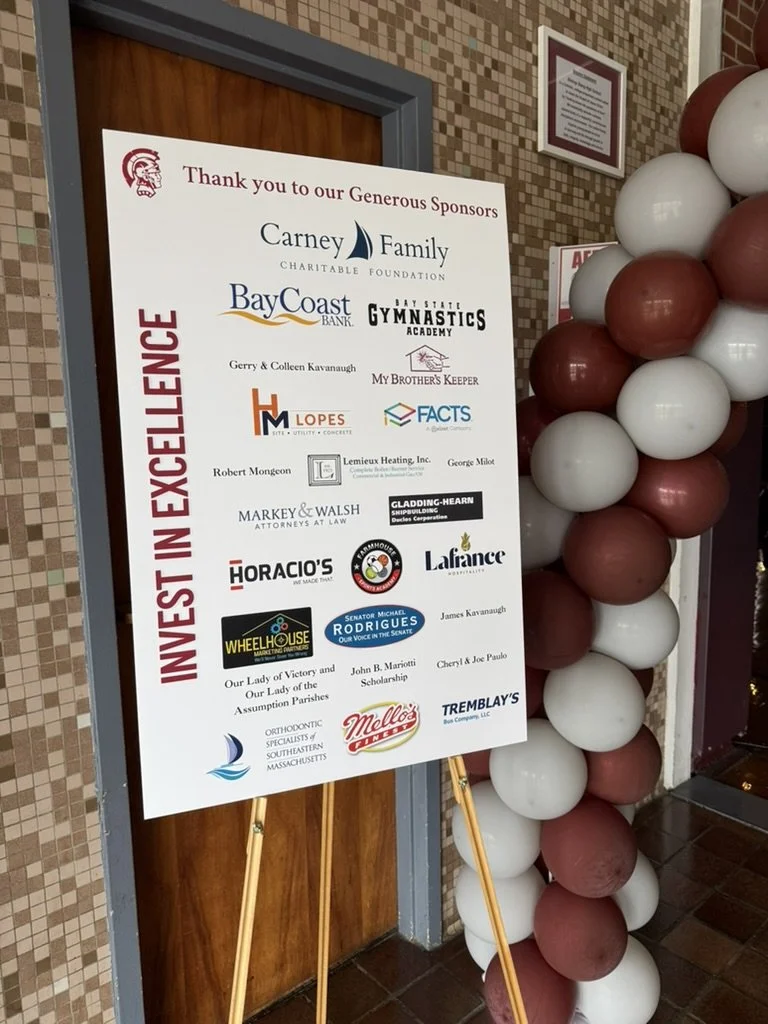
Foam board signage for inductees and sponsors
Registration and OneCause sign-up boards
Reserved table signage
Custom drink signage
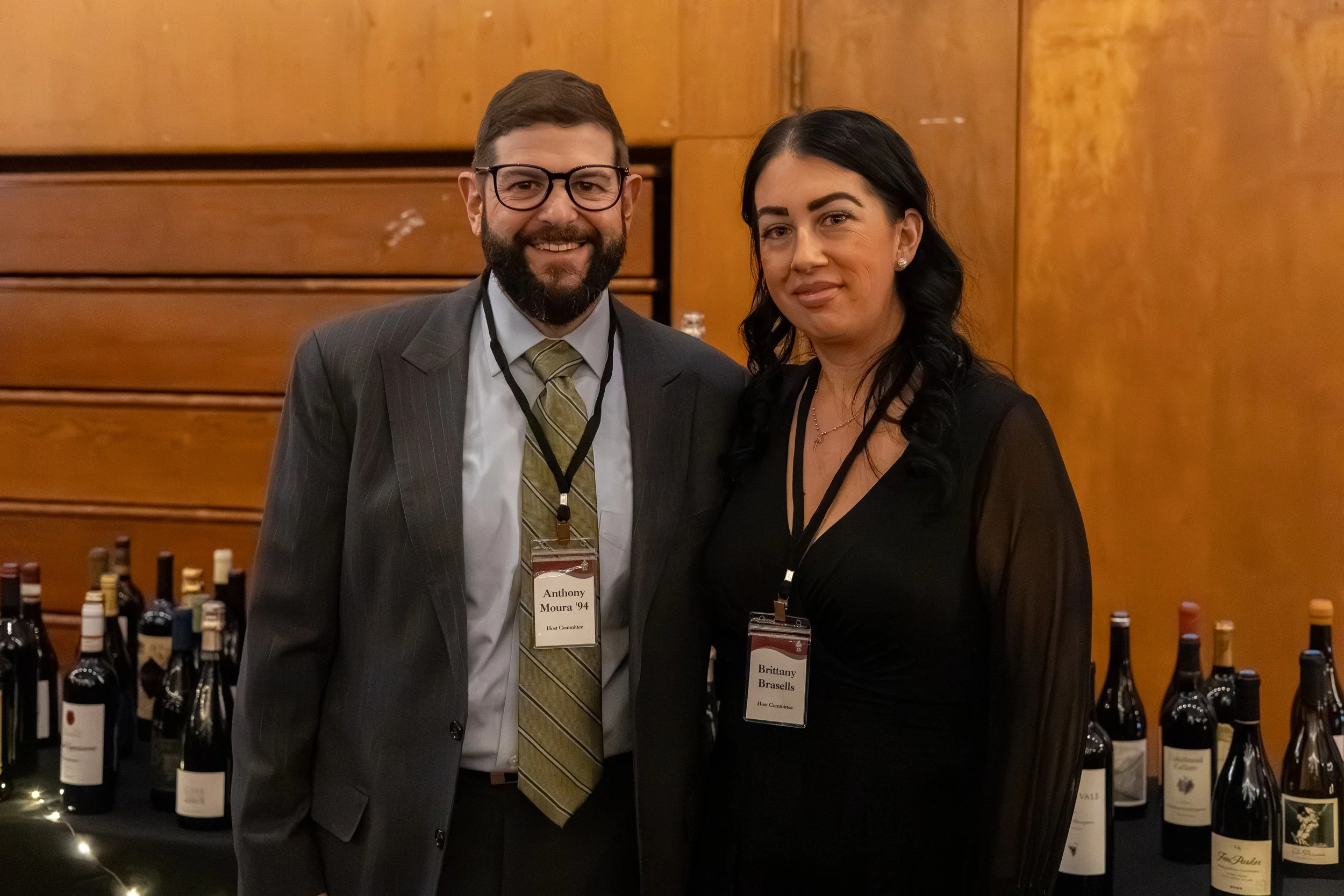
Individual attendee name tags
Each piece contributed to a cohesive, polished environment.
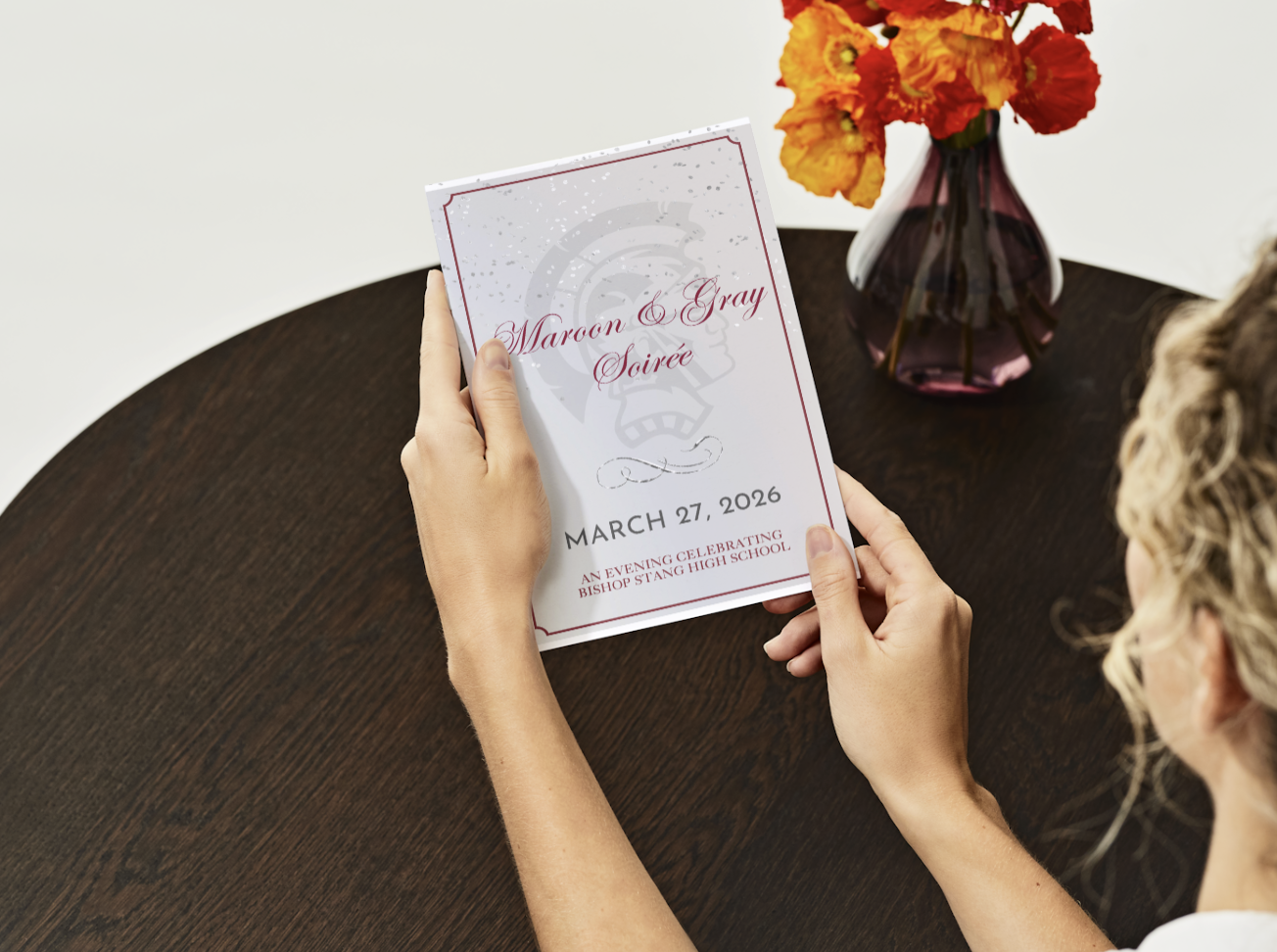
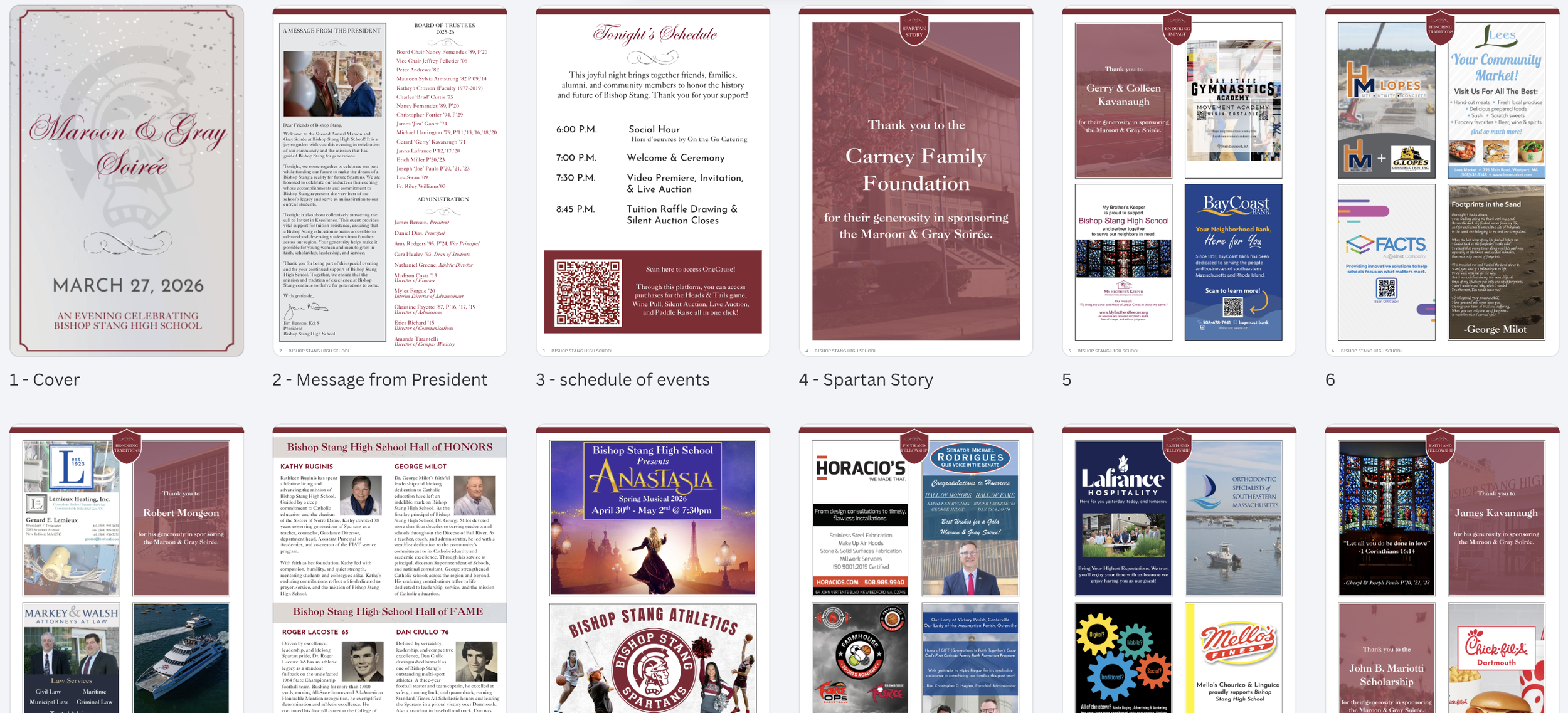
Program Book Design
The program book served as both an informational guide and a key fundraising tool. I designed a multi-page layout that included:
Event schedule
Inductee features
Auction listings and donor credits
Sponsor advertisements
Paddle numbers for live donations
A unique challenge here was designing ads for sponsors who didn’t provide one, requiring me to quickly learn and apply different brand styles while maintaining consistency within the book.
What I Built
This project resulted in a full campaign and event system, including:
Targeted Email Campaigns (multiple audience segments)
Trifold Printed Invitations + Mail-In Donation Inserts
Social Media Graphics (inductees, raffle promotions)
Tuition Raffle Marketing Materials
Accepted Students Event Inserts
OneCause Event Setup & Auction Structure
Foam Board Event Signage
Sponsor Advertisements (custom-designed)
Event Program Book (multi-page layout)
Name Tags & Table Signage
Branded Event Experience from entry to exit
Results
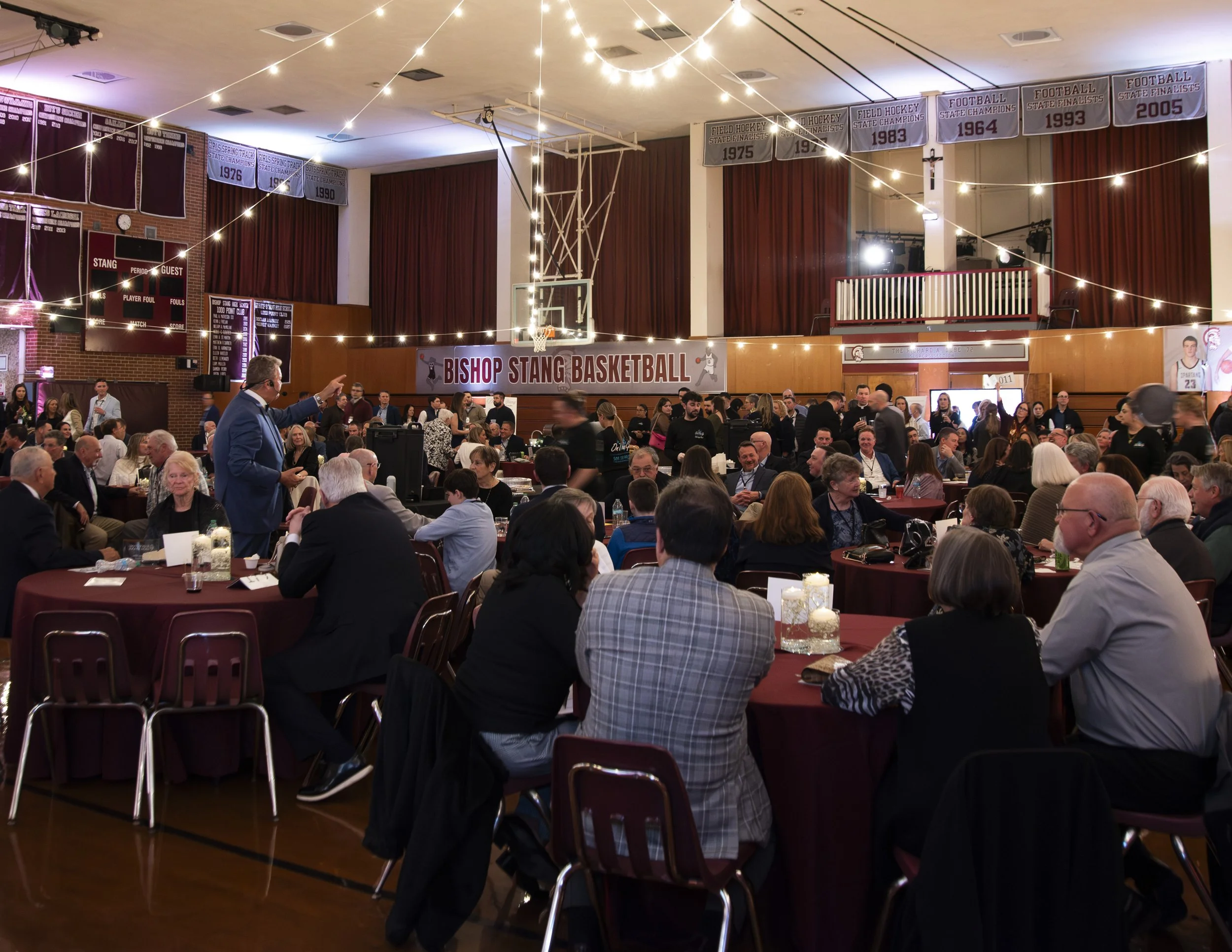
The 2026 Maroon & Gray Soirée was a major success:
300+ attendees
$100,000+ net funds raised
Strong engagement across both digital and physical channels
Increased accessibility for a wider range of attendees
Reflection & Next Steps
This project pushed me to think beyond isolated design pieces and instead focus on designing an entire experience.
One of the biggest takeaways was how important it is to design for real people with different needs. Small decisions like including both QR codes and physical payment options made a huge difference in accessibility and participation.
I also learned how to quickly adapt to constraints, especially when creating sponsor ads without provided assets. That process strengthened my ability to interpret brand identity and apply it consistently under time pressure.
If I were to continue evolving this project, I would explore:
A more unified visual system or mini brand guide established earlier in the process
Expanded social media storytelling (behind-the-scenes, countdowns, live coverage)
Post-event engagement materials to extend the impact beyond one night
Overall, this experience reinforced my interest in designing for real-world impact, where thoughtful design directly contributes to community engagement and meaningful outcomes.